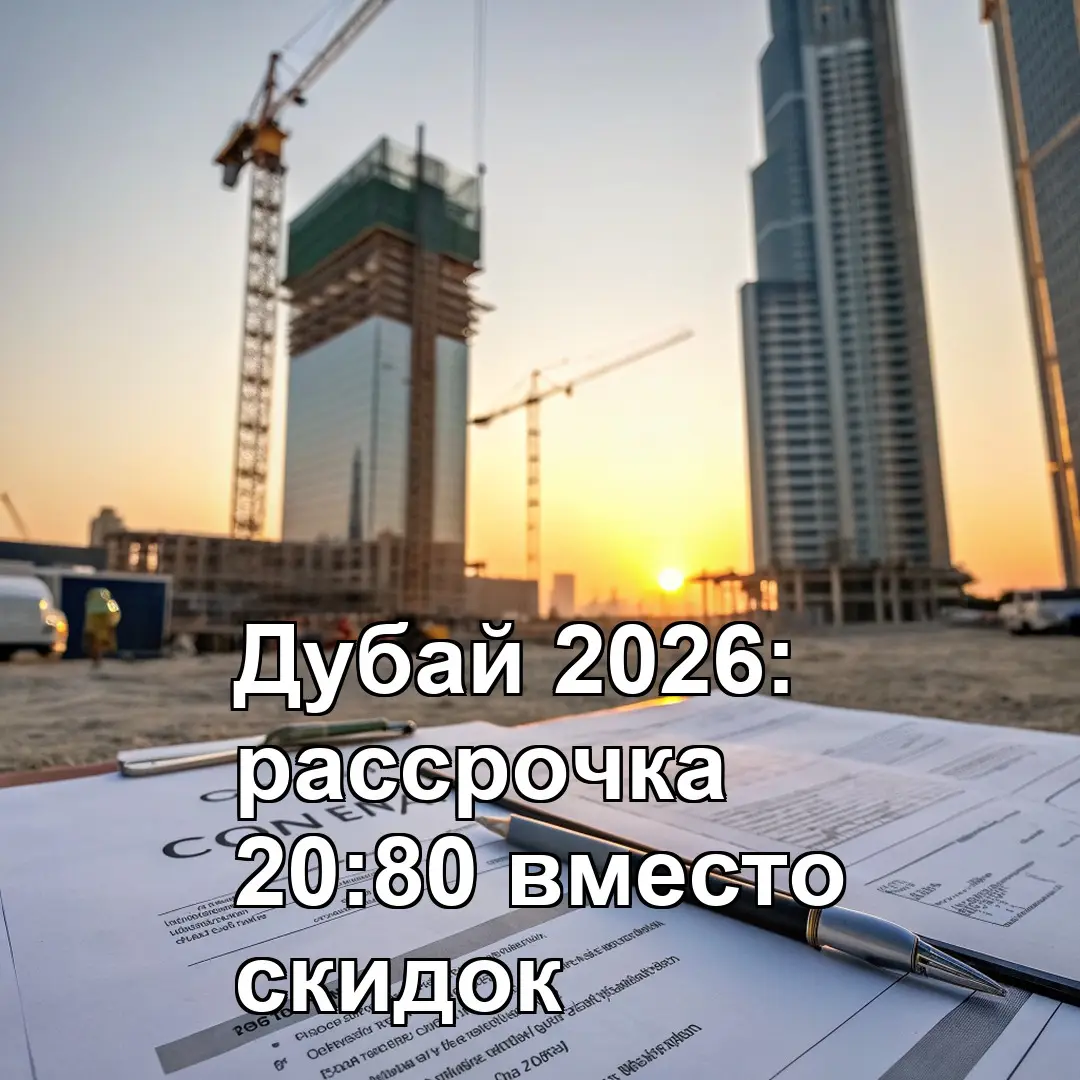
Dubai Developers Are Rewriting Payment Plans as Off-Plan Demand Cools in 2026
Off-plan transactions in Dubai fell to roughly 49,700 in the first five months of 2026, down 7.1 percent from the same period last year. New project launches dropped even harder, down about 68.5 percent year on year. Off-plan sales still make up 65 to 76 percent of every property transaction in the emirate. Fewer new towers are chasing a smaller pool of committed buyers, and developers are answering with softer payment terms. Prices, for the most part, haven’t moved.
Buyers scanning listings this year could easily read the new offers as generosity. They are more accurately a signal about who is absorbing risk during construction. A standard off-plan structure asks the buyer to fund most of a project as it rises, commonly 50/50, 60/40 or 70/30 against the build schedule, with the remainder due at handover. When that structure holds, the developer collects cash steadily and the buyer carries the exposure if a project slips or the market softens before the keys arrive. With transaction volume down 7 percent and launches down nearly 70 percent in the same stretch, developers have a reason to move some of that exposure onto their own books, at least until handover.
The numbers behind the shift
Reuters coverage of the slowdown quoted Rajiv Ghanekar of Indus Real Estate describing a broader pattern taking shape across the market: some developers are now taking 20 to 30 percent of the price during construction and pushing 70 to 80 percent to a later date. That structure is tied to projects with a shorter runway to handover, closer to 18 months. That’s a narrower window than the multi-year timelines buyers usually associate with early-stage launches.
Other developers are working the same lever from different angles. Several have introduced temporary waivers on the 4 percent DLD registration fee. Some are discounting up to 30 percent for buyers who pay in a single lump sum. A few are attaching guaranteed rental-style income to the installment period itself, effectively paying buyers to keep funding construction while the building goes up. Emaar took the opposite approach on volume: the developer launched more than 15 new projects in the first quarter of 2026 alone, with payment plans stretching up to five years and entry deposits as low as 5 percent.
What Sobha’s 20:80 promotion actually included
The clearest single example landed in early August. According to several Dubai property agencies, Sobha Realty ran a 48-hour payment promotion on 8 and 9 August: 20 percent down, the remaining 80 percent due only at handover, with zero interest on the deferred portion. The offer applied to units priced at AED 5 million and above, and only in towers already at an advanced stage of construction, with handover expected within roughly the next 20 months, putting completion around late 2028 to early 2029. Selected promo units also came with the 4 percent DLD registration fee waived and a reduced 20 percent NOC fee for buyers who resell before handover.
None of this replaces the payment structures Dubai buyers have used for years. Plans built around 60/40, 50/50, 70/30 and 80/20 splits between construction and handover remain standard, and post-handover plans stretching two to five years, occasionally longer, are still common on larger projects. What has changed is the entry point: first installments that used to sit around 10 percent have, on some launches, dropped to 3 to 5 percent, and developers are increasingly marketing the deferred balance as interest-free, a detail worth confirming line by line before signing anything.
What this means for buyers
For a buyer, the handover date behind the split matters more than the split itself. A 20:80 structure with handover 20 months out asks a buyer to be confident about pricing and rental demand in early 2029, not just to enjoy a low deposit today. Our team walks buyers through three checks before any deferred plan: the actual construction stage of the specific tower, not the developer’s broader portfolio; the DLD fee waiver confirmed in writing rather than assumed from marketing copy; and whether the zero-interest clause holds if handover slips past the promised date. A promotion built around a 48-hour window is designed to compress that due diligence. We tell buyers to do it anyway.
Our team runs each of these offers through the same underwriting checklist before any client acts on one: the developer’s completion record on the specific building, the deferred 80 percent measured against realistic 2029 rental and resale scenarios, and confirmation that the zero-interest clause is written into the sale and purchase agreement itself, not just the sales brochure.
Sobha’s own window closed after 48 hours, on August 9. The 20-month handover clock behind it is still running.
Frequently asked questions
What does a 20:80 payment plan mean for a Dubai off-plan buyer?
It means paying 20 percent of the price at booking and the remaining 80 percent only at handover, sometimes with zero interest on the deferred amount. Sobha Realty’s August 2026 promotion is the clearest recent example: it applied to units priced AED 5 million and above, in towers already at an advanced construction stage, with handover expected within about 20 months.
Are 20:80 plans or similar low-deposit structures available across most new Dubai projects this year?
No. Terms vary sharply by developer and project. Some developers are offering 20 to 30 percent during construction with 70 to 80 percent due later, but tied to projects with a shorter handover horizon, closer to 18 months. Emaar’s 2026 launches take a different shape entirely, with deposits from 5 percent and payment plans running up to five years.
Why are developers offering these terms now?
Off-plan transaction volume dropped to roughly 49,700 in the first five months of 2026, down 7.1 percent year on year, while new project launches fell about 68.5 percent. With fewer new buyers entering the market, developers are competing for the ones who remain by absorbing more of the construction-period financial risk themselves.
Is the DLD registration fee waiver included automatically with these plans?
Not automatically. Some developers, including Sobha in its August promotion, bundled a temporary waiver of the 4 percent DLD fee with specific offers. These waivers are typically tied to particular units, price thresholds and promotional windows, so buyers should confirm the exact terms in writing rather than assume they carry over to every unit in a project.
What should a buyer check before signing a low-deposit, interest-free payment plan?
The construction stage of the specific tower, not the developer’s track record generally; written confirmation that the zero-interest clause is part of the sale and purchase agreement; the realism of the projected handover date; and any resale conditions attached, such as Sobha’s reduced 20 percent NOC fee for units sold before handover.
Does this shift mean Dubai’s off-plan market is weakening?
Transaction volume and new launches are both down year on year, but off-plan sales still account for 65 to 76 percent of all property transactions in the emirate. That share argues against reading this as a collapse. It looks more like a market recalibrating around fewer, better-financed buyers.
If you are comparing payment plans on a project like this, reach out and our team will walk you through the numbers.