UAE’s National Ecotourism Policy: What It Means for Nature-Adjacent Real Estate
The UAE Cabinet has approved a National Ecotourism Policy, a framework designed to grow the tourism sector while protecting the country’s environmentally sensitive sites (Khaleej Times, September 2, 2026). For most readers this lands as an environmental headline. For anyone buying property near a reserve, a mangrove belt, or a desert conservation zone, it reads differently: it is a signal about where the state is prepared to put long-term protection, and where it is not.
That distinction matters more than it sounds. Off-plan marketing across the UAE routinely borrows nature as a selling point, mangrove views, desert backdrops, coastal wetlands. Very little of that marketing tells a buyer whether the surrounding land carries any actual protected status, or whether it is simply undeveloped land waiting for the next master plan. The new policy gives buyers a way to tell the difference, because it formalizes protection, funding and management around specific ecosystems rather than leaving “green” as a marketing adjective.
What the policy actually does
The National Ecotourism Policy sets out several concrete strands: protection of environmentally sensitive sites and vulnerable ecosystems, development of sustainable tourism products such as eco-lodges and low-impact nature tours, involvement of local communities in how tourism around these sites is managed, and a national smart ecotourism platform intended to coordinate government entities, developers and civil society around a shared regulatory structure (Khaleej Times, September 2, 2026). It builds on work MOCCAE has run since 2018 under “The UAE’s Natural Wonders,” a project promoting the country’s protected areas through a dedicated platform and partnerships with the travel sector (MOCCAE, “The UAE’s Natural Wonders.
The scale behind this is not new. It has been building for several years, and the Cabinet policy is best read as the point where that groundwork becomes a unified national framework rather than a collection of separate initiatives.
The numbers that matter for buyers
Four figures give this policy real weight rather than leaving it as an announcement.
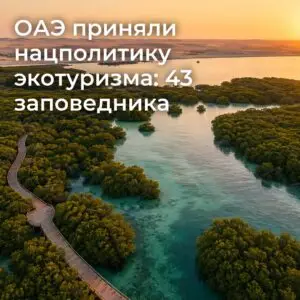
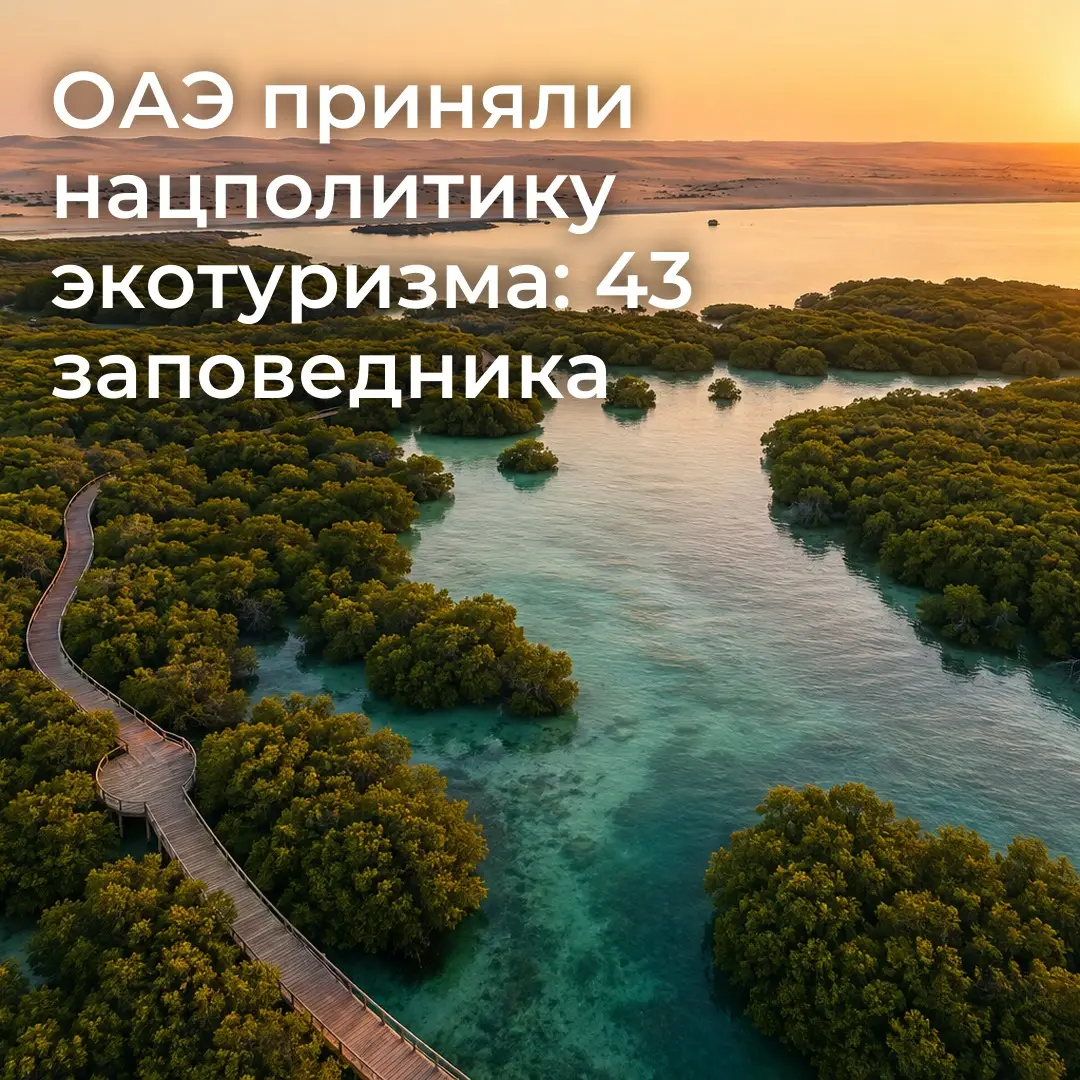
43 protected areas across the UAE are already promoted under the Natural Wonders ecotourism programme (MOCCAE, “The UAE’s Natural Wonders. That is the current map of where conservation status exists on the ground.
Abu Dhabi alone has expanded its nature reserves to 26, covering more than 22,000 square kilometres, close to 20 percent of the emirate’s total land area (WAM, February 3, 2026). For anyone assessing a masterplan near the emirate’s coastline or interior, that ratio is a useful reference point: one in five hectares of Abu Dhabi now sits inside some form of protected designation.
100 million mangroves is the national planting target for 2030. Jubail Island in Abu Dhabi has committed to 1 million of those trees on its own, with more than 350,000 already in the ground, alongside roughly two kilometres of educational boardwalks integrated into the residential development itself (noticias.ae, January 14, 2026). This is the clearest example currently available of conservation infrastructure built directly into a real estate project, rather than sitting next to one.
15 years’ imprisonment and AED 2 million in fines are the maximum penalties under federal wildlife law for illegal trade in endangered species, a level the government has explicitly described as “zero tolerance” (WAM, May 22, 2026). For investors, this is the enforcement side of the policy, evidence that protected status carries legal weight rather than remaining aspirational.
Why this changes the buyer-side calculation
Nature-adjacent property has always carried two competing stories. One says proximity to a reserve or coastline caps future development and protects views and land values. The other says an “undeveloped” plot next to nature is simply next in line for a masterplan once the market allows it. Until now, buyers had almost no way to tell which story applied to a specific project.
The National Ecotourism Policy narrows that gap. A site with confirmed protected status under the 43-area Natural Wonders programme, or one that falls inside Abu Dhabi’s expanding 26-reserve network, has a materially different risk profile than a plot marketed as “close to nature” with no formal designation attached. Overdevelopment risk drops where legal protection exists. Pricing premiums for waterfront and nature-view units become easier to justify when the ecosystem behind the view has a policy and a budget attached to it, rather than a rendering.
This also reshapes what legitimate marketing can claim. Developers building next to a genuinely protected mangrove system, a designated desert reserve, or a documented wildlife corridor now have a policy framework to point to. Developers using nature imagery next to unprotected or undesignated land do not, and that gap is worth asking about directly before signing anything.
A framework for evaluating nature-linked projects
Buyers we work with are increasingly asking about sustainability positioning on off-plan projects, and our approach is to separate the claim from the designation. Three questions do most of the work.
First, is the adjacent land formally protected, or simply currently empty. A reserve inside the 43-area national programme or Abu Dhabi’s 26-reserve network is a different asset than vacant land pending a future masterplan decision.
Second, does the project fund or maintain the ecosystem it markets, the way Jubail Island’s mangrove planting and boardwalk infrastructure are built into the development itself, or does it only reference nearby nature in brochures without contributing to it.
Third, what happens to density and building rights on the surrounding parcels over the next decade. Protected status under the new policy should mean those rights are constrained; confirming that with the relevant authority is a five-minute call that a lot of buyers skip.
Where this shows up across the market
In Abu Dhabi, the reserve expansion sits closest to Jubail, Saadiyat and the emirate’s mangrove belt, areas where conservation and residential development are already being built side by side rather than kept apart. In Dubai, the Desert Conservation Reserve and Al Marmoom have been part of the Natural Wonders programme since its early phase, and the new policy’s smart ecotourism platform is likely to bring more formal eco-lodge and low-impact tourism activity to the areas bordering them. In the northern emirates, mountain and wadi landscapes in Ras Al Khaimah and coastal reserves in Fujairah and Sharjah fit the same conservation logic even where they have not yet been named in federal campaigns, and we would expect them to feature more prominently as the smart platform rolls out.
For Golden Visa holders specifically, this policy adds a credible layer to the “sustainable lifestyle” pitch that UAE developers have been making for several years. A national framework with enforcement teeth behind it, rather than a marketing slogan, is a more defensible reason to relocate a family or a business around nature-linked assets.
FAQ
What is the UAE’s National Ecotourism Policy.
It is a Cabinet-approved framework combining protection of environmentally sensitive sites with expansion of sustainable tourism, including eco-lodges, nature parks and a smart national platform to coordinate government, developers and communities (Khaleej Times, September 2, 2026).
How many protected areas does the policy cover.
The Natural Wonders programme currently promotes 43 protected areas across the UAE’s seven emirates (MOCCAE, “The UAE’s Natural Wonders.
Does this affect property values near nature reserves.
It can. Confirmed protected status limits future overdevelopment risk on adjacent land, which supports premium pricing for waterfront and nature-view units in projects that genuinely border protected ecosystems.
What is Abu Dhabi doing specifically.
Abu Dhabi has expanded its reserves to 26, covering more than 22,000 square kilometres, close to 20 percent of the emirate (WAM, February 3, 2026).
Is there legal enforcement behind conservation claims.
Yes. Federal wildlife law carries penalties of up to 15 years’ imprisonment and AED 2 million in fines for illegal trade in endangered species (WAM, May 22, 2026).
How should a buyer verify a “nature-linked” project claim.
Confirm the adjacent land’s protected status with the relevant authority, check whether the developer funds or maintains the ecosystem it markets, and ask what building rights apply to surrounding parcels over the next decade.
If you are evaluating a project marketed around nature, reserves or a “sustainable lifestyle” story, our team at uae-prop can help separate genuine conservation-backed positioning from marketing language, and walk through what the National Ecotourism Policy actually protects in the area you are considering.