Sharjah and Dubai Are Becoming One Housing Market With Two Rulebooks
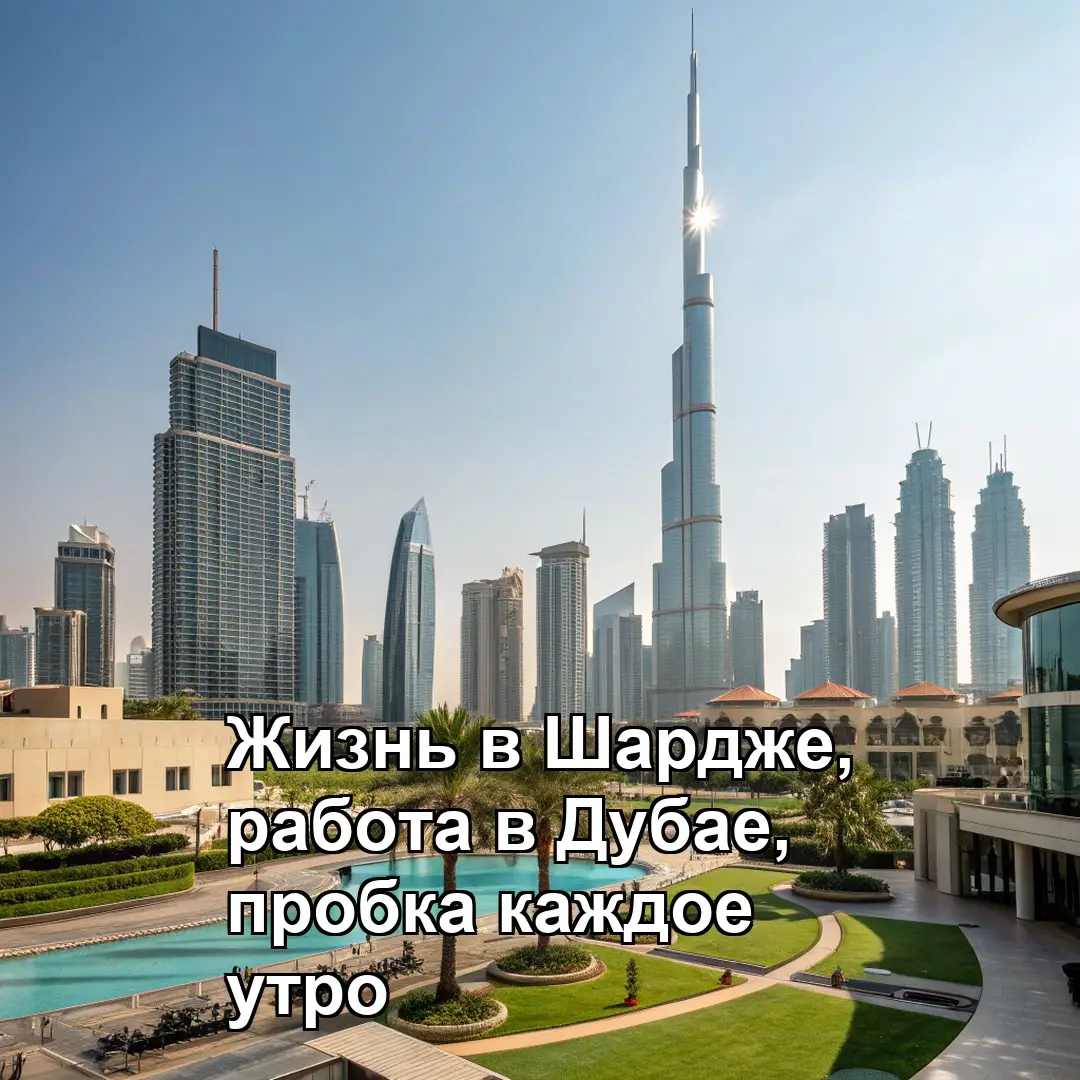
A studio in Sharjah’s Al Nahda area runs a fraction of the rent for a comparable unit across the border in Dubai’s Al Qusais. The distance between the two points is a fifteen-minute drive on a normal afternoon. That gap alone explains one of the most persistent commuter flows in the UAE: people who sleep in one emirate and work in another, crossing a border that is invisible on the road but very visible in a lease agreement.
We work with buyers who initially assume Sharjah and Dubai are variations on the same product. They aren’t. Sharjah enforces a dry law: alcohol sale and consumption are restricted to a small number of licensed hotel venues, and the emirate applies a more conservative code around dress, public behavior, and mixed-gender socializing than its neighbor. Dubai runs a freer, more commercially liberal model, with alcohol licensing widely available in hotels, bars, and restaurants, and a lighter social rulebook overall. Neither approach is right or wrong. They’re different governance choices, and each one shapes who chooses to live where.
What actually separates the two markets
Price is the most visible divider, but it’s a downstream effect of something else: land policy and freehold structure. Sharjah restricts freehold property ownership for expatriates to a narrower set of designated zones compared to Dubai’s broad freehold map, and it has historically kept residential supply growth more measured. Dubai, by contrast, has spent two decades building an investor-facing freehold system across dozens of master communities, with new supply arriving continuously. That supply differential is a core reason Dubai rents and sale prices sit meaningfully above Sharjah’s for comparable unit types.
Regulatory posture compounds the gap. Sharjah’s municipal and licensing framework is built around a more conservative civic identity, one that intentionally does not chase the same tourism and nightlife economy Dubai has built around Downtown, Marina, and JBR. That’s not an accident of underdevelopment. It’s a policy choice, and it filters straight into land use, retail licensing, and the type of buyer or tenant each emirate’s masterplan is designed to attract.
The result is two adjacent labor markets separated by a governance line rather than a geographic one. Dubai’s job base still concentrates the region’s highest-paying roles in finance, trade, tech, and hospitality management. Sharjah’s economy leans more toward manufacturing, logistics, education, and government-adjacent employment, sectors that don’t command Dubai-scale compensation. Combine lower Sharjah wages with lower Sharjah housing costs and higher Dubai wages with higher Dubai housing costs, and you get a rational sorting mechanism: households optimize for the best combination available to them, not for a single-emirate address.
Why this matters for anyone evaluating property in either market
This cross-border commuting pattern isn’t a temporary quirk. It’s now a structural feature of how the northern Emirates function as one integrated labor and housing system. Multiple long-running counts by regional transport authorities have tracked hundreds of thousands of daily crossings on the Sharjah-Dubai corridor, and that flow has only grown as both emirates have added residents faster than either could add proportional job density on its own side of the line.
For buyers, that has a direct pricing implication. Sharjah communities positioned near major crossing points, close highway access, wide bridges, arterial roads feeding into Dubai, tend to hold rental demand more reliably than communities set deeper into Sharjah’s interior, even when unit specifications are nearly identical. Commute friction is priced in, whether or not a listing mentions it. Buyers evaluating Sharjah as a yield play should treat proximity to the border corridor as a primary variable, not a secondary convenience.
The reverse dynamic matters too. Dubai’s most affordable submarkets, areas like International City, Dubai South, and parts of Al Qusais, function partly as a release valve for renters priced out of the core but unwilling to accept a Sharjah commute. Understanding where a Dubai micro-market sits on that spectrum, close enough to core job centers to justify its premium over Sharjah, or affordable specifically because it inherits some of Sharjah’s price gravity, is a more useful lens than looking at headline yield alone.
There’s also a durability angle worth weighing. Sharjah’s more conservative regulatory posture has historically meant slower, steadier supply growth rather than the boom-bust cycles that have periodically hit parts of Dubai’s off-plan segment. That steadiness can appeal to buyers prioritizing rental stability over capital appreciation velocity. It’s a different risk profile, not a lesser one.
FAQ
Is it legal to drink alcohol in Sharjah?
No. Sharjah maintains a dry law, and alcohol sale and consumption are not permitted outside a small number of exceptions tied to specific licensed venues catering to non-resident guests. This differs sharply from Dubai, where hotel and restaurant licensing makes alcohol widely available.
Can foreigners buy freehold property in Sharjah the same way they can in Dubai?
Not on the same scale. Sharjah permits foreign freehold ownership only within a limited set of designated zones, while Dubai operates a much broader freehold framework spanning dozens of master-planned communities. This is a major reason average prices differ between the two markets.
Why do so many people live in Sharjah but work in Dubai?
The combination of lower Sharjah rents and Dubai’s higher-paying job base makes commuting the financially rational choice for a large share of the workforce. Daily cross-border traffic volumes on the Sharjah-Dubai corridor have remained consistently high for years as a result.
Does proximity to the Dubai border affect Sharjah property values?
Yes. Communities with faster, more reliable access to the main crossing points tend to sustain stronger rental demand than comparable units located deeper within Sharjah, because commute time is a direct driver of tenant demand.
Is Sharjah a good market for rental yield compared to Dubai?
It can be, particularly in corridor-adjacent communities where lower purchase prices combine with steady tenant demand from Dubai commuters. The tradeoff is typically slower capital appreciation relative to Dubai’s more liquid, investor-driven core areas.
Should buyers treat Sharjah and Dubai as one combined market?
Functionally, yes, for anyone evaluating rental demand or tenant behavior. Legally and regulatory, no, since ownership rules, licensing, and civic codes remain distinct. Our team encourages buyers to model both emirates together when assessing commuter-driven demand, while underwriting each one separately against its own ownership and regulatory framework.