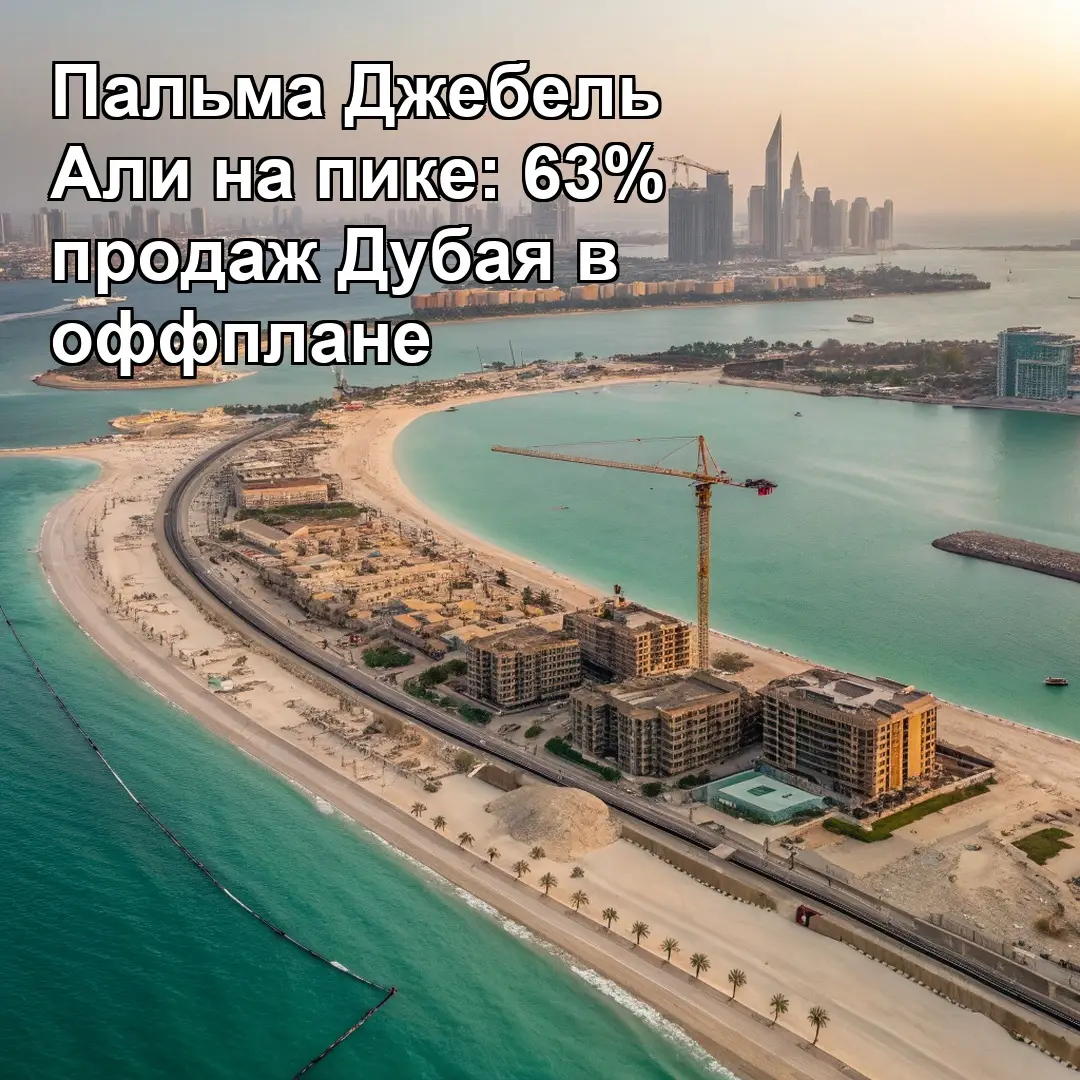
Palm Jebel Ali’s 2026-2027 Handovers: What the Relaunch Means for Off-Plan Buyers
Dubai has put a rough date on the next chapter of one of its most recognizable coastlines. Developer communications and specialist project trackers now point to the first handovers on the relaunched Palm Jebel Ali landing around 2026 to 2027, and Russian-language coverage of the announcement narrows that further, stating the first properties will be delivered in 2027 (Russian Emirates, September 2026). For an island that spent over a decade as a paused blueprint, a public delivery window changes the calculation for anyone weighing an off-plan position today.
Our team has watched buyers treat Palm Jebel Ali as two different things depending on when they last looked at it. To some, it is still the pre-2008 island that got shelved. To others, following the 2023 to 2024 relaunch, it is simply another new project among dozens launching across Dubai every quarter. Both views miss what actually matters for underwriting a purchase here: the site’s physical scale, the pace at which infrastructure work has moved since the relaunch, and the market cycle it is entering.
What is actually being built
The revived masterplan, approved by Dubai’s Ruler in 2023, lays out 16 fronds across a span of roughly 13.4 kilometers, with close to 91 kilometers of beachfront once the reclamation work is complete. Planning documents describe capacity for around 35,000 families and more than 80 hotels, alongside villas, apartments and leisure components. Nakheel has confirmed contracts covering marine works, dredging, land reclamation, beach profiling and a new six-kilometer road, with the first eight fronds targeted for infrastructure readiness in early 2025. The first phase of villas and plots, launched in late 2023, reportedly sold out quickly, an early signal of demand for a large new stretch of waterfront land in a market where that supply is scarce.
Why the timing lines up with the cycle
Palm Jebel Ali’s construction restart did not happen in isolation. It landed inside the strongest off-plan cycle Dubai has recorded in over a decade. Dubai Land Department figures for 2024 show more than 169,000 property transactions worth AED 488 billion across the emirate, and off-plan sales made up over 102,000 of those deals, worth roughly AED 213 billion. Off-plan’s share of total home sales rose from 54 percent in 2023 to 63 percent in 2024. In the second quarter of 2024 alone, off-plan transactions reached 26,268, an 80 percent jump year on year and only a fraction below the previous record set in 2009. Momentum carried into 2025: May recorded AED 66.8 billion in sales across 18,700 transactions, up 44 percent in value and 6 percent in volume against the same month a year earlier.
That backdrop matters for underwriting a purchase on an island that will not be finished for several years. A project entering delivery during a thin market has to create its own demand. A project entering delivery during a market already absorbing six-figure off-plan transaction volumes annually has a resale and rental pool it can lean on from day one.
The buyer-side framework we apply
Scale and cycle timing explain why Palm Jebel Ali is marketable. They do not answer the question a buyer actually needs answered, which is whether a specific unit, phase and payment plan make sense for that buyer’s horizon. Our team works through the same checklist on any large phased island project, Palm Jebel Ali included:
Phasing risk. Early fronds with confirmed infrastructure contracts sit on a different risk profile than fronds still awaiting reclamation. Buyers should know which frond a unit sits on and where that frond stands in the construction sequence before comparing prices.
Payment plan alignment. Staggered handovers between 2026 and into 2030 allow buyers to spread payments against expected income or against the sale of another asset. That only works if the plan is matched to the buyer’s actual liquidity, not just the developer’s default schedule.
Escrow and delivery documentation. On a project with a long build-out, the paperwork tying payment milestones to verified construction progress is worth more scrutiny than the render on the sales brochure.
Exit assumptions. Buyers planning to sell before handover need a realistic view of resale liquidity on that specific frond, not the island-wide narrative.
How this fits different investor profiles
For an off-plan buyer focused on appreciation, entering at masterplan or early-phase pricing carries the same logic that rewarded early buyers of Palm Jumeirah, with the caveat that construction execution over the next several years is the variable that determines whether that logic plays out.
For a Golden Visa holder or long-term resident, the delivery horizon stretching toward 2030 lines up naturally with a ten-year visa timeline, making it realistic to buy now and plan a move once the community matures, while renting or living elsewhere in Dubai in the meantime.
For an investor already holding property in Dubai, in Palm Jumeirah, Dubai Marina or JBR, Palm Jebel Ali represents a way to diversify across a new coastal corridor rather than concentrate further in an existing one, while also gaining exposure to the wider Jebel Ali, Dubai South and Al Maktoum International Airport growth area.
For an Abu Dhabi-based investor, the project offers a way to add Dubai’s tourism-driven rental and capital appreciation profile to a portfolio otherwise weighted toward Abu Dhabi’s more institutional demand base, without giving up a primary base in the capital.
For an investor already active in Ras Al Khaimah, Palm Jebel Ali functions as a more established counterweight, a globally recognized Dubai waterfront asset that balances exposure to RAK’s newer, faster-growing tourism story.
Frequently asked questions
Q: When will the first homes on Palm Jebel Ali actually be handed over?
A: Developer communications and project trackers point to handovers beginning around 2026 into 2027 for the earliest villa clusters, with subsequent fronds completing through 2028 to 2030. Russian-language coverage citing local sources specifies 2027 for the first delivered properties.
Q: Is Palm Jebel Ali the same project that was paused after 2008?
A: It is the same site, but not the same plan. The masterplan was redesigned and relaunched in 2023 to 2024 with new infrastructure contracts, a revised layout of 16 fronds, and updated capacity targets, rather than a resumption of the original pre-2008 design.
Q: How does Palm Jebel Ali compare to Palm Jumeirah for investors?
A: Palm Jebel Ali is planned to be significantly larger in coastline terms, with more beachfront and a higher hotel count. Palm Jumeirah offers a track record of completed infrastructure and established pricing, while Palm Jebel Ali offers earlier entry pricing against a longer construction timeline and correspondingly higher execution risk.
Q: Does buying off-plan on Palm Jebel Ali support a Golden Visa application?
A: Off-plan and completed properties meeting the relevant investment threshold can support Golden Visa eligibility in Dubai generally. Buyers should confirm current thresholds and documentation requirements against the specific unit and payment stage before assuming eligibility.
Q: What is the biggest risk with a phased island project like this one?
A: Construction sequencing. Fronds with confirmed contracts and dredging already underway carry materially different delivery risk than fronds still in earlier planning stages, so the frond and phase matter more than the project name.
Q: Should an investor buy now or wait for a later phase?
A: It depends on the buyer’s horizon and liquidity. Earlier phases typically carry lower entry pricing and longer holding periods before handover, while later phases reduce construction-timeline exposure at a higher entry cost.
Our team reviews Palm Jebel Ali the same way we review any large phased launch, by separating the parts of the story that are already verified, the infrastructure contracts, the transaction data, the confirmed masterplan, from the parts that remain projections. Buyers considering an allocation here are welcome to bring us a specific unit or phase, and we will walk through the payment plan, the frond-level delivery status and how it fits alongside whatever else is already in their portfolio.