Al Maktoum International: Inside Dubai’s Plan for a 260-Million-Passenger Airport City
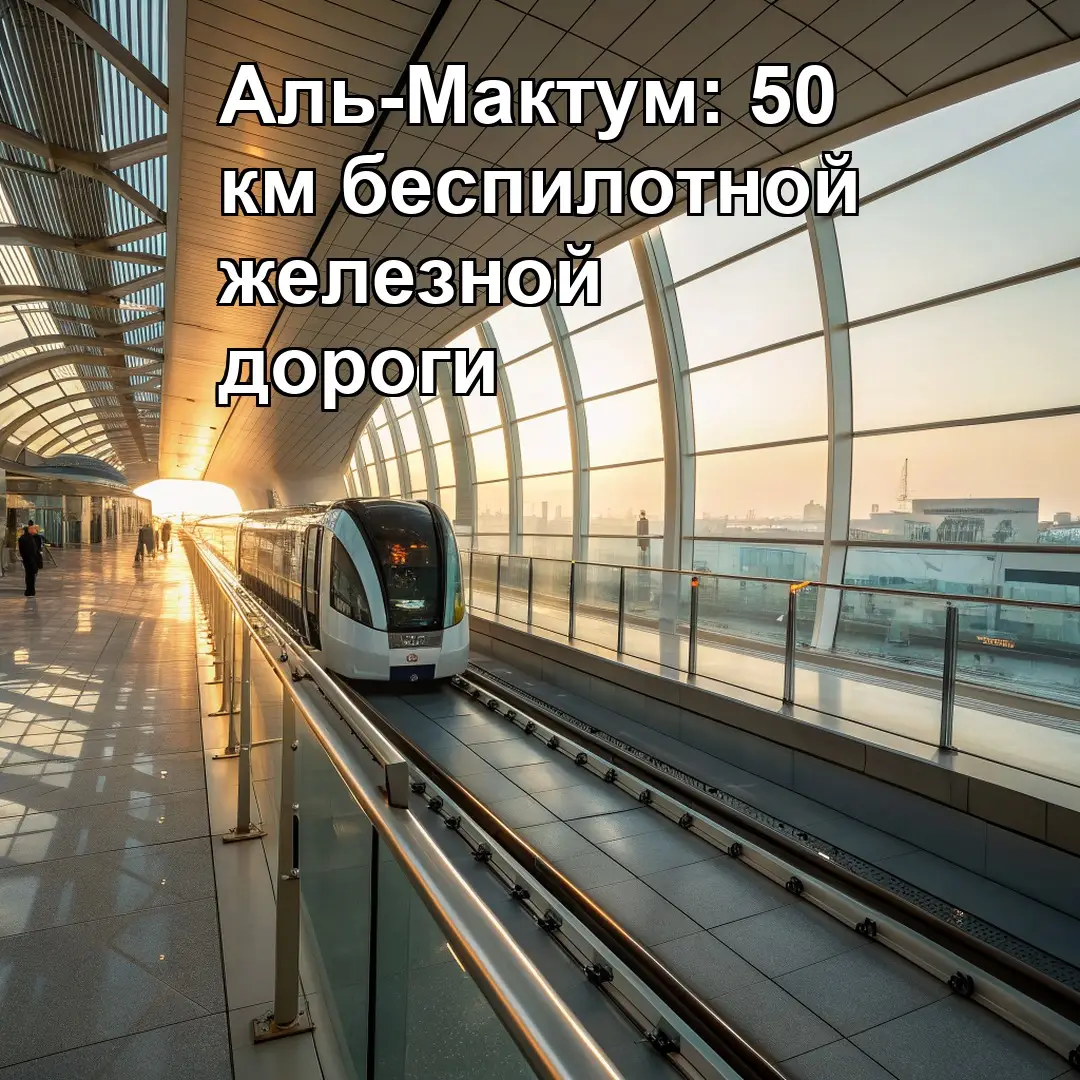
Dubai has approved AED 128 billion (roughly USD 35 billion) for a new passenger terminal at Al Maktoum International Airport, and the project is now moving from announcement to execution. The plan positions the airport, also known as DWC, as the largest in the world by capacity, with a final target of 260 million passengers a year and about 12 million tons of cargo annually. Inside that build, Dubai is also constructing what will be the largest automated inter-terminal railway system anywhere: a driverless network stretching roughly 50 km with nine stations, designed purely to move passengers between terminals inside the airport itself.
For anyone tracking real estate in Dubai South, Expo City, and the broader DWC corridor, this is the kind of infrastructure commitment that resets the long-term map of the emirate. Our team spends a lot of time helping investors separate headline numbers from what actually moves value on the ground, so it is worth breaking the project down into what is confirmed, what is still years away, and where the practical opportunity sits.
The numbers behind the mega-hub
The scale of Al Maktoum International is deliberate and well documented. The approved terminal budget sits at AED 128 billion. Once complete, the airport is designed to handle 260 million passengers annually and around 12 million tons of cargo, supported by five parallel runways and roughly 400 gates. Physically, the finished complex will be about five times the footprint of the current Dubai International Airport (DXB).
That scale will not arrive in one step. The first phase of the new infrastructure is built for a capacity closer to 150 million passengers a year, with the full 260 million figure reached in later stages through the 2030s. This phasing matters more than the topline number for anyone modeling when demand around the airport actually materializes.
A railway built for the terminal, not between airports
Inside this build sits a specific and often misunderstood piece: the automated inter-terminal railway. This driverless system will run approximately 50 km across nine stations, connecting terminals within DWC itself. It is an internal transport backbone for the airport, not the separate rail line that has been discussed to link DXB and DWC across the city. Confusing the two overstates what either project delivers on its own, and it is a distinction we flag often when buyers ask about “the new airport train.”
Completion of the rail network is targeted for late 2031, timed to align with the opening of the first phase of the rebuilt airport around 2032. That gives the market a concrete horizon rather than an open-ended promise, which is useful for anyone trying to time an entry.
What investors consistently miss
The mistake we see most often is treating 260 million passengers and AED 128 billion as facts that apply today. They describe where DWC is heading, not where it stands right now. DXB currently handles close to 100 million passengers a year and remains the operational center of Dubai’s aviation traffic. The shift toward DWC will happen gradually as capacity comes online in phases through the early 2030s, not overnight once the terminal opens.
That gap between announcement and delivery is exactly where speculative pricing tends to creep into off-plan listings near the airport. A project marketed as “airport city” or “DWC-adjacent” today is selling proximity to a construction site with a mid-2030s completion horizon, and pricing should reflect that distance rather than the finished vision.
How we read the DWC corridor
For off-plan buyers looking at Dubai South, Expo City, and the wider DWC corridor, the relevant comparison is Dubai’s own metro history. Areas along the Red and Green Lines saw real, sustained appreciation once stations opened and daily ridership became routine, not when the lines were merely approved. The same logic applies here: land and off-plan pricing near DWC should track the delivery schedule of the rail network and airport phases, specifically the late 2031 to 2032 window, rather than the eventual 260-million-passenger endpoint.
For Golden Visa holders building a long-term base in the UAE, DWC represents a growth corridor rather than a core holding. Our approach with residents planning multi-decade horizons is to keep the bulk of a portfolio in established areas such as Dubai Marina, Downtown, or Business Bay, where liquidity and rental history are proven, and to treat DWC exposure as a smaller, time-horizon-matched allocation tied to the 2031-2032 delivery milestones rather than an immediate income play.
For investors comparing Dubai against Abu Dhabi or Ras Al Khaimah, the airport project reinforces a specific argument rather than a general one: Dubai’s near-term edge is aviation and logistics infrastructure at a scale no other emirate is currently building. That is a useful data point for portfolio balance, not a reason to overweight one corridor. Pairing steadier yield in Abu Dhabi or RAK with measured DWC exposure is a structure we discuss often with clients splitting capital across emirates.
Positioning ahead of the curve
The most practical angle for buyers today is timing rather than location alone. The 2024-2027 window sits before the rail network and first airport phase are operational, which means current off-plan pricing in the corridor has not yet absorbed the infrastructure once it is running day to day. Buyers entering now are pricing a construction commitment, not a completed asset, and that gap tends to close as delivery milestones are met rather than in a single jump at completion.
The cargo side of the project deserves more attention than it typically gets. A 12-million-ton annual freight capacity supports warehousing, light industrial space, and logistics-linked commercial demand well beyond passenger terminals. That is a slower, less headline-driven trend than passenger traffic, but it tends to be the more durable driver of occupier demand in the years immediately after an airport phase opens.
Frequently asked questions
Is the Al Maktoum International railway the same as the planned DXB-DWC line?
No. The roughly 50 km, nine-station system is an internal network moving passengers between terminals inside DWC. It is separate from any future rail connection linking DXB and DWC across the city.
When will the new airport and rail network actually open?
The inter-terminal railway is targeted for completion by late 2031. The first phase of the rebuilt airport, with capacity around 150 million passengers a year, is expected to open around 2032, with the full 260-million-passenger target reached later in the decade.
Does DWC replace DXB immediately?
No. DXB remains the primary hub today, handling close to 100 million passengers annually. Traffic will shift to DWC gradually as its phases come online through the 2030s.
Is now a good time to buy off-plan near DWC?
It depends on time horizon. Current pricing reflects a construction project years from completion. Buyers comfortable holding through the 2031-2032 delivery window are positioned closer to the value the infrastructure will eventually support; buyers expecting near-term liquidity should look elsewhere.
How should Golden Visa holders think about this corridor?
As a smaller, growth-oriented allocation alongside an established core portfolio, not as a primary residence or income holding until the airport and rail milestones are actually delivered.
Does the airport project affect areas outside Dubai, such as Abu Dhabi or RAK?
Indirectly. It strengthens Dubai’s aviation and logistics positioning specifically, which is useful context for investors balancing exposure across emirates rather than a reason to shift an entire portfolio toward one corridor.
Our team helps buyers evaluate exposure to the DWC corridor against the actual delivery timeline rather than the marketing around it, and against the rest of a Dubai or UAE-wide portfolio. If you are weighing an off-plan position near Al Maktoum International or comparing it with established areas, talk to uae-prop before committing capital.