The UAE’s Real National Dish Isn’t Sold at a Shawarma Stand
Ask a tourist what Emirati food tastes like, and the answer is almost always shawarma, hummus, or a mixed grill plate. None of that is wrong exactly, but none of it is Emirati either. It’s the food that ended up in the UAE, not the food that came from it. The dishes that actually belong to this coastline, machboos, harees, luqaimat, camel milk, cardamom-laced coffee, sit one street back from the tourist strip, in family-run spots most visitors never think to look for.
Our team gets asked about this constantly by clients who’ve spent years split between Dubai and London or Dubai and Geneva. They know the skyline, the golf courses, the beach clubs. They don’t know what a Friday lunch actually looks like in an Emirati household. That gap is worth closing, not because it makes for a better vacation story, but because understanding what a place actually eats tells you something about how it actually lives, and that matters for anyone making a long-term bet on this market.
What machboos actually is, and why it’s the starting point
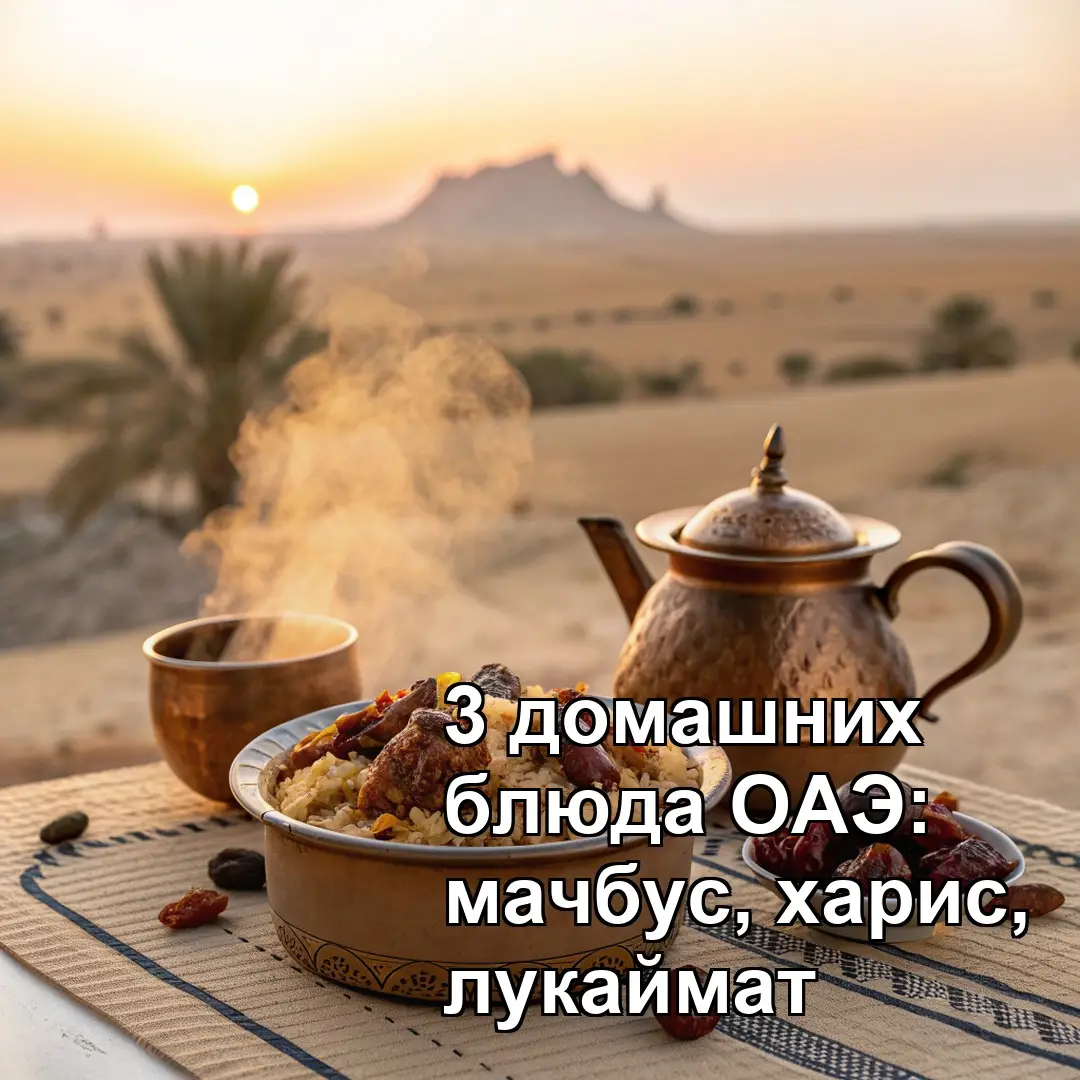
Machboos is the dish to learn first, because everything else in Emirati cooking radiates out from it. It’s a spiced rice dish, rice cooked low and slow with dried lime, cardamom, cinnamon, and usually chicken, lamb, or fish, and it shares real DNA with biryani and other rice traditions across the wider Gulf and Indian Ocean trade routes. That lineage is the point. The UAE’s food culture was never sealed off. Pearling routes, monsoon trade winds, and centuries of contact with Persia, India, and East Africa all left fingerprints on what ended up in the pot. Machboos tastes the way it does because the coastline it comes from was always a crossroads, not an isolated peninsula.
The dried lime, called loomi, is the ingredient that gives machboos its signature sourness, and it’s also the easiest way to spot the real version versus a hotel-buffet approximation. Buffet versions often skip it or use it too sparingly, because loomi is sharp and takes some getting used to. If the rice tastes purely savory with no tartness cutting through it, that’s a flag.
Harees, luqaimat, and the textures a tourist menu skips
Harees is the dish most likely to surprise a first-timer, because it doesn’t look like anything on a typical restaurant menu. Wheat and meat, usually chicken or lamb, are cooked together for hours until the mixture breaks down into something closer to a thick, savory porridge than a stew. It’s not photogenic. It’s also one of the older dishes in the region’s food history, tied to Ramadan and to celebratory gatherings, and it’s the dish our clients tend to describe as “the one that actually tastes like someone’s grandmother made it,” which, in most of the family-run places serving it well, is close to literally true.
Luqaimat is the easier entry point, and the one worth saving for last at a meal. These are small fried dough balls, similar in spirit to a doughnut hole, finished with date syrup and sometimes sesame. They’re sold at stalls during Ramadan nights and served as dessert year-round elsewhere. The texture is the whole point: crisp outside, soft and slightly chewy inside, with the date syrup adding a caramel depth that white sugar can’t replicate.
Camel milk and cardamom coffee round out the picture, and both say something about climate as much as taste. Camel milk is lower in fat than cow’s milk and has a faint saltiness that takes a sip or two to place; it shows up in everything from plain glasses to lattes and even chocolate bars in specialty shops now. Gahwa, the cardamom-spiced coffee served in small handleless cups, is unsweetened by design, brewed pale and fragrant rather than dark and bitter, and traditionally poured alongside dates to balance it. It’s a hospitality ritual as much as a beverage, and it’s usually the first thing offered in a majlis setting, long before any conversation about business gets underway.
Where to actually find it
The honest answer is: not on Sheikh Zayed Road, and not in a hotel buffet spread. The places serving these dishes well tend to be smaller, family-run, and clustered in older, less glossy pockets of the city rather than the tourist corridor. That simply describes where the food economy that serves residents, rather than photographs, has always operated, without knocking the visible skyline. Our team’s advice to clients is straightforward: ask locally, look for where Emirati families are actually eating on a Thursday or Friday, and treat a crowded, unglamorous room as a better signal than a polished one.
For anyone evaluating the UAE as a place to live long-term rather than visit, this detail matters more than it seems to at first glance. A market with a real, distinct food culture underneath the skyline is a market with actual depth, not just a stage set. Buyers who take the time to find machboos before they find a villa tend to understand what they’re buying into a little better than those who don’t.
FAQ
What is the difference between machboos and biryani?
They share the same rice-and-spice family, but machboos typically uses different spicing (loomi/dried lime is central) and preparation methods rooted in Gulf coastal cuisine, while biryani reflects South Asian layering techniques. Both emerged from overlapping historic trade routes, which is why they can taste closer to cousins than strangers.
Is Emirati food spicy?
Generally no. Emirati cuisine leans on warming spices like cardamom, cinnamon, and saffron rather than chili heat. The flavor profile is aromatic and savory-sour (from dried lime) more than hot.
Where can visitors reliably find authentic Emirati food rather than tourist-oriented restaurants?
Family-run and smaller establishments away from the main tourist corridors tend to serve more traditional preparations. Asking residents directly, rather than relying on hotel recommendations, is usually the more reliable approach.
Is camel milk safe and common to drink?
Yes, camel milk is widely consumed in the UAE and is regulated and sold commercially, including in mainstream retail. It’s naturally lower in fat than cow’s milk and has a distinct, slightly saline taste.
What is gahwa and how is it traditionally served?
Gahwa is cardamom-spiced Arabic coffee, brewed unsweetened and served in small cups, typically alongside dates. It plays a central role in Emirati hospitality customs and is often the first thing offered to guests.
Why does understanding local food culture matter for someone considering the UAE as a long-term base?
Food culture is a proxy for how embedded and layered a place’s identity actually is beneath its visible development. For buyers and residents planning a long-term move, that depth is a useful, low-stakes way to gauge whether a market has substance beyond its skyline.