Marsa Al Saadiyat: What Abu Dhabi’s AED 100 Billion Waterfront District Means for Buyers
Abu Dhabi has just put a number on the final chapter of Saadiyat Island: AED 100 billion, roughly USD 27.2 billion, the announced investment value of Marsa Al Saadiyat, a new 6.4 million square meter waterfront district stretching along 8 kilometers of coastline (Abu Dhabi Media Office, July 2026). The project was launched with Sheikh Khaled bin Mohamed bin Zayed Al Nahyan, Crown Prince of Abu Dhabi, in attendance, a signal that this is not a routine developer press release but a state-level statement about where the emirate’s luxury real estate story goes next.
A last phase, not a side project
Marsa Al Saadiyat is being positioned as the closing piece of the Saadiyat Island masterplan, the district that links the existing Saadiyat Cultural District, home to Louvre Abu Dhabi and Zayed National Museum, with a new residential and marina precinct designed to hold more than 58,000 residents. For buyers, the framing matters. A masterplan’s final phase usually carries different economics than an opening phase: infrastructure is already proven, demand for the island’s identity is established, and the remaining land is scarcer. Investors evaluating Marsa Al Saadiyat are not betting on whether Saadiyat works as an address. That question was settled years ago by Louvre Abu Dhabi’s cultural pull and the villa premiums the island already commands. The open question is what a final, larger-scale phase does to supply, pricing, and the island’s overall character.
What is actually being built
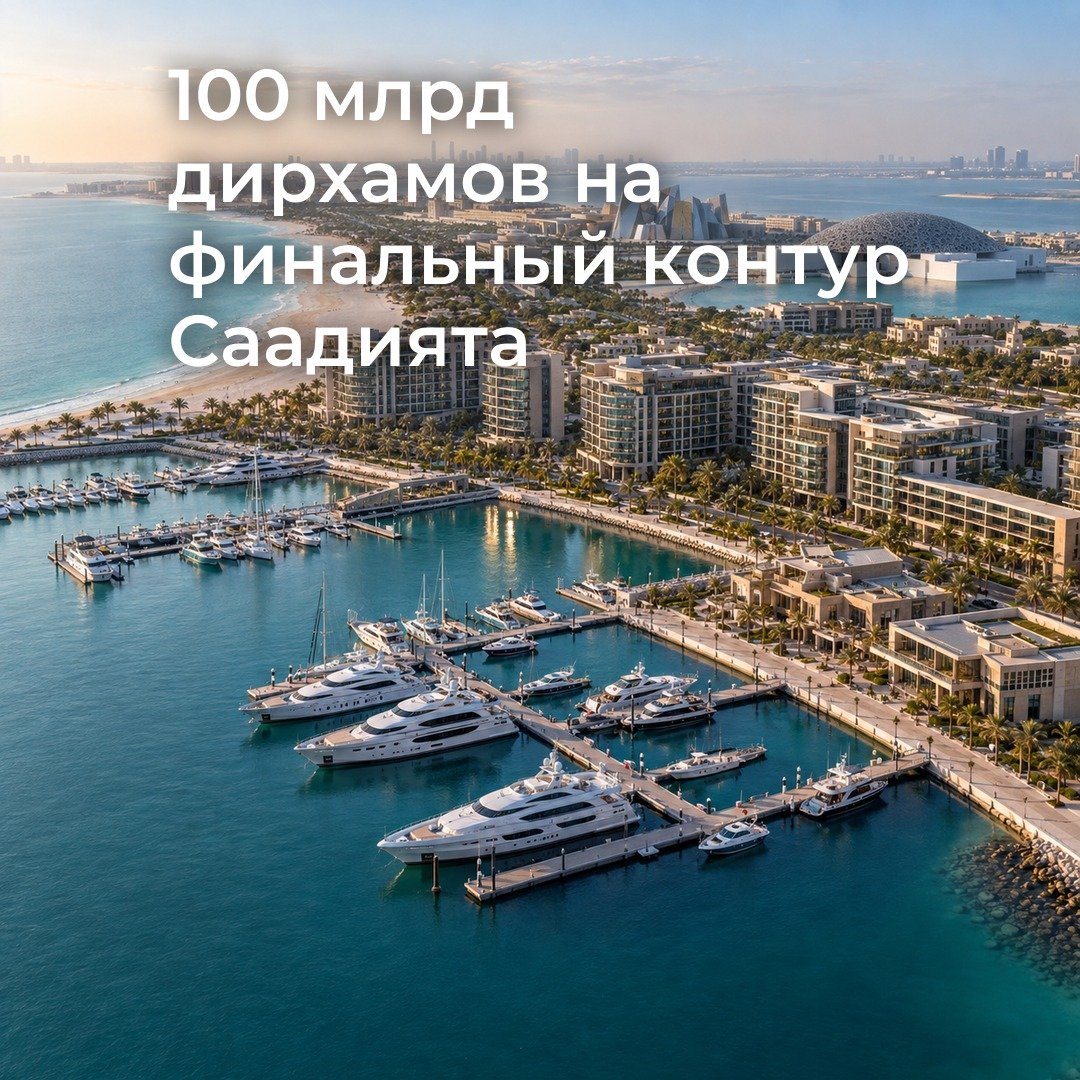
The residential mix spans private mansions, luxury villas, waterfront apartments, branded residences, and a hillside standalone-villa district, giving the project a wider price ladder than a typical single-format launch. At the center sits Abu Dhabi’s largest marina, with more than 350 berths for yachts and sailing boats, built into the 8 kilometer coastline. Around it: 5.6 kilometers of beaches, a 1 kilometer boardwalk with restaurants and retail, roughly 140 kilometers of walking trails, and 46 kilometers of cycling tracks. That trail-to-coastline ratio is unusually high for a UAE waterfront project and points to a district designed for daily use by residents, not only for weekend visitors.
Supporting infrastructure includes two luxury hotels, parks, medical facilities, and three schools, which matters more to end-users evaluating Marsa Al Saadiyat as a primary residence than to buyers thinking purely in resale terms. A theatre quarter anchored by the Arts House, seating more than 6,000, extends the island’s cultural offer beyond its existing museums and ties the new district directly into the Saadiyat Cultural District on foot.
The marina, the culture link, and a rail station worth watching
Two elements in the plan deserve more attention from investors than headline square meters. First, the marina scale: at 350-plus berths, it is described as the largest in Abu Dhabi, which changes the competitive set for waterfront living on the island rather than simply adding another few hundred moorings. Second, an underground Etihad Rail station is built into the masterplan, tying Marsa Al Saadiyat into the national rail network currently under development across the UAE. Connectivity infrastructure of this kind tends to be one of the more reliable long-term liquidity drivers for a district, because it reduces the risk of a project feeling geographically isolated once the initial marketing push fades.
Aldar Properties, Abu Dhabi’s largest listed developer, is the master developer responsible for the overall design and primary infrastructure. Sales of the first homes are scheduled for the second half of 2026, with site preparation and infrastructure works starting in the third quarter of 2026. A full completion timeline for the district has not been disclosed.
Where Marsa Al Saadiyat fits for different buyer profiles
For an off-plan buyer already active in Dubai or Abu Dhabi, the appeal is early entry into a final masterplan phase, which historically tends to carry a premium once a district’s identity is complete rather than still forming. The rail link and marina scale also lower the risk profile compared with a standalone launch on unproven land.
For a Golden Visa holder or relocating HNWI, the pitch is less about yield and more about daily life: direct pedestrian access to Louvre Abu Dhabi and the island’s museums, three schools, medical facilities, and a wellness-oriented sister project on the island (Sei Saadiyat) all point toward a district built for full-time residents rather than holiday-home owners. State-level backing for the launch reduces regulatory uncertainty for buyers weighing a long-term family move.
For a Dubai-based investor already holding Dubai Marina or Business Bay positions, Marsa Al Saadiyat offers geographic diversification into a market with a different demand base, government and institutional residents, cultural tourism, and typically steadier rental performance than Dubai’s more volatile waterfront segments. The trade-off is a smaller current comparable set and less price history to underwrite against.
For an investor building a cross-emirate waterfront portfolio, including positions in Ras Al Khaimah projects such as The Strand, Marsa Al Saadiyat is a useful benchmark for scale and amenity depth. Comparing infrastructure commitments, marina size, cultural anchors, rather than headline pricing alone, gives a clearer read on which waterfront district is likely to hold value once initial launch pricing settles.
Frequently asked questions
What is Marsa Al Saadiyat?
It is a new waterfront district on Saadiyat Island in Abu Dhabi, announced with an AED 100 billion investment value and developed by Aldar Properties as the final phase of the island’s masterplan.
How large is the project?
The masterplan covers 6.4 million square meters along 8 kilometers of coastline, with capacity for more than 58,000 residents.
What residential formats are included?
Private mansions, luxury villas, waterfront apartments, branded residences, and a hillside standalone-villa district.
When do sales start?
First home sales are scheduled for the second half of 2026, with site preparation and infrastructure works beginning in the third quarter of 2026.
What infrastructure is planned beyond housing?
A marina with more than 350 berths, 5.6 kilometers of beaches, a 1 kilometer boardwalk, roughly 140 kilometers of walking trails, 46 kilometers of cycling tracks, two luxury hotels, three schools, medical facilities, and an underground Etihad Rail station.
Why does the Saadiyat Cultural District connection matter?
Marsa Al Saadiyat has direct pedestrian access to Louvre Abu Dhabi and the island’s other museums, which supports long-term demand from buyers seeking a cultural, not just coastal, address.
Marsa Al Saadiyat is a large enough announcement that the details will keep shifting as sales open and pricing is released. Our team tracks these updates alongside comparable waterfront launches across Abu Dhabi, Dubai, and Ras Al Khaimah, and helps buyers weigh a launch like this one against what is already in their portfolio. TALK TO UAE-PROP before the first release if Marsa Al Saadiyat fits the profile you are building toward.