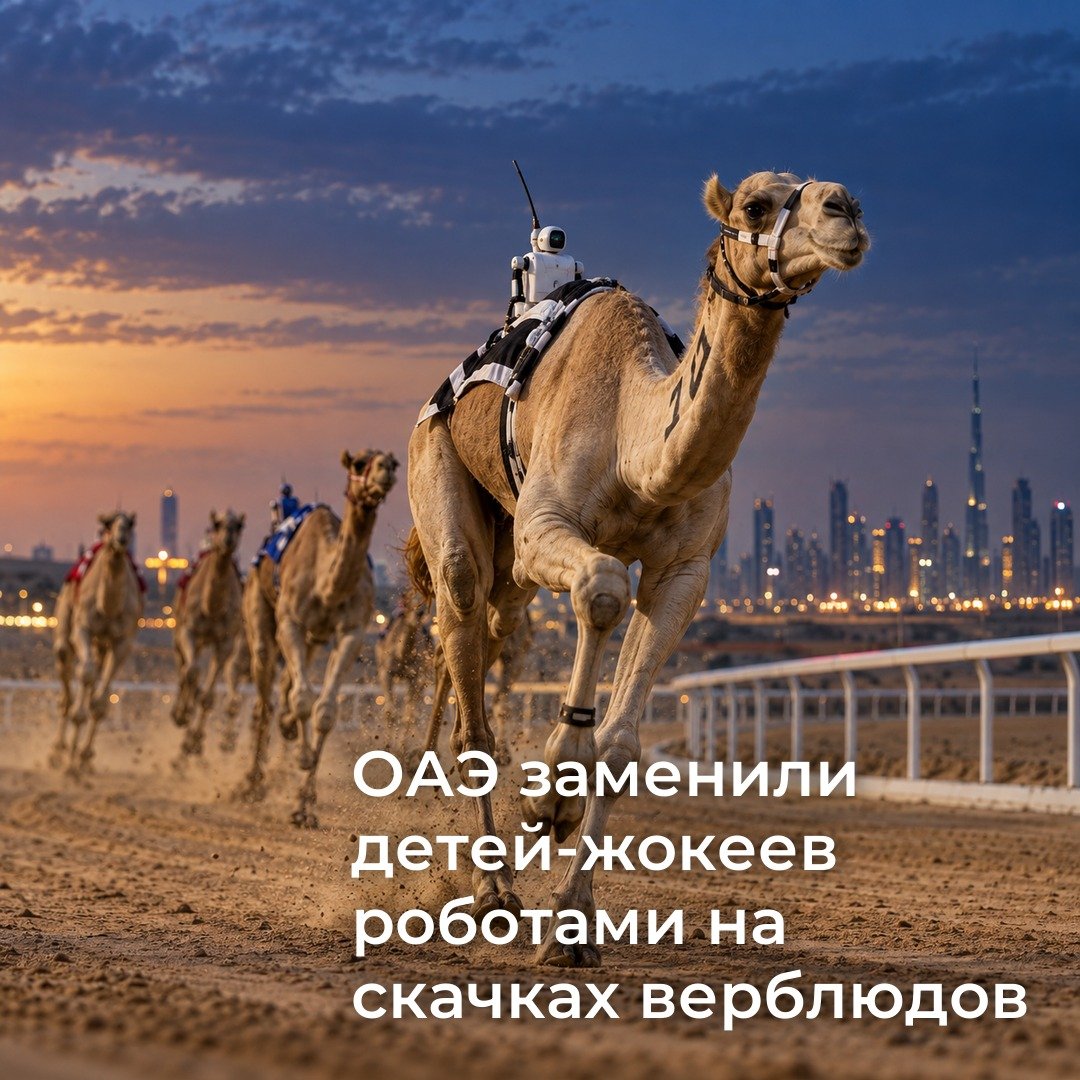
How the UAE Replaced Child Camel Jockeys With Remote-Controlled Robots
Until the middle of the 2000s, the jockeys riding camels down racetracks across the Gulf were children. Some were younger than ten. Stables brought them in from Pakistan, Bangladesh and Sudan because lighter riders produce faster camels, a straightforward calculation that built an entire informal labor system around desert racing long before anyone with regulatory power stepped in.
A Sport Built Around Body Weight
Camel racing carries deep roots in Gulf heritage, tied to Bedouin tradition and tribal prestige long before prize money turned it into a professional spectator sport. As purses grew, so did the pressure to shave weight off every camel’s back. Stables recruited boys from South Asia and East Africa, some through family arrangements, some through brokers, and put them on animals running at speed across open desert track. The arrangement carried real physical risk. Falls, injuries and years spent far from home were part of a system that rights researchers documented at length through the 1990s and into the early 2000s.
The 2002 Age Ban
The UAE moved first in the region on this question, setting a minimum jockey age of 15 in 2002. It was a meaningful legal marker, years ahead of similar action elsewhere in the Gulf. A minimum age on paper alone leaves the underlying incentive in place. Camels still ran faster with less weight in the saddle, and a law banning young riders does not automatically produce a supply of adult jockeys light enough to take their place. Closing that gap required an engineering answer. Racing federations needed a device that could stand in for the child on the camel’s back without slowing the animal down.
The Device That Replaced the Child
What emerged is a small remote-controlled unit that clips onto the camel’s saddle in place of a rider. It carries a whip mechanism and a receiver, and it weighs a fraction of what a human jockey would. The person actually directing the race no longer sits on the animal at all. A handler follows alongside the track in a vehicle, watching through the windshield and working a handset that controls both direction and pace.
The job did not disappear. It moved from the camel’s back to the car window. Reading a camel’s stride at speed while operating a remote control from a moving vehicle is its own skill, distinct from anything a child rider was ever asked to do, and it belongs to adults employed for that specific task rather than recruited for their body weight.
What Camel Tracks Look Like Today
Pull up to a race in the UAE now and the picture is unmistakable. A line of SUVs runs parallel to the course, windows down, a handler in each one holding a small controller while a camel with a compact metal jockey clipped to its back runs the stretch out front. Nothing about that scene resembles what camel racing looked like a generation earlier, and once the UAE showed the setup could work without slowing the sport down, other racing federations across the region moved toward the same model.
It is the kind of institutional story worth pausing on, less for the camels themselves than for what the sequence reveals. A government identified a labor practice it wanted to end, wrote a rule, then built the physical tool that made the rule hold up on the ground rather than sitting as an unenforced policy. That order, rule first and hardware to back it up second, is not limited to the racetrack, and it shows up in how the country tends to handle problems well outside of it.
A visitor arriving at a track at dawn today sees the handlers, the idling vehicles, the small controllers, and a camel running the rail with nobody on its back at all. It takes a moment to remember what used to be sitting there instead.
Frequently Asked Questions
When did the UAE ban child camel jockeys?
The UAE set a minimum jockey age of 15 in 2002, becoming the first country in the region to establish that threshold in law.
Where did child camel jockeys come from before the ban?
Stables recruited boys, some younger than ten, mainly from Pakistan, Bangladesh and Sudan.
What replaced child jockeys on UAE camel tracks?
A lightweight remote-controlled device fitted onto the camel’s saddle, operated by a handler driving alongside the track.
How does a robot jockey actually work?
The unit clips onto the saddle in place of a rider and includes a whip mechanism connected to a receiver. A handler follows the race from a vehicle next to the track and controls the camel’s pace and direction with a handset.
Why were children used as jockeys in the first place?
Camels run faster carrying less weight, and children were lighter than adult riders, which created steady demand for young, low-weight jockeys regardless of the risk involved.
Did other Gulf countries adopt the same solution?
Yes. Once the UAE demonstrated that robotic jockeys could replace children without slowing the sport, other racing federations in the region moved toward the same setup.